
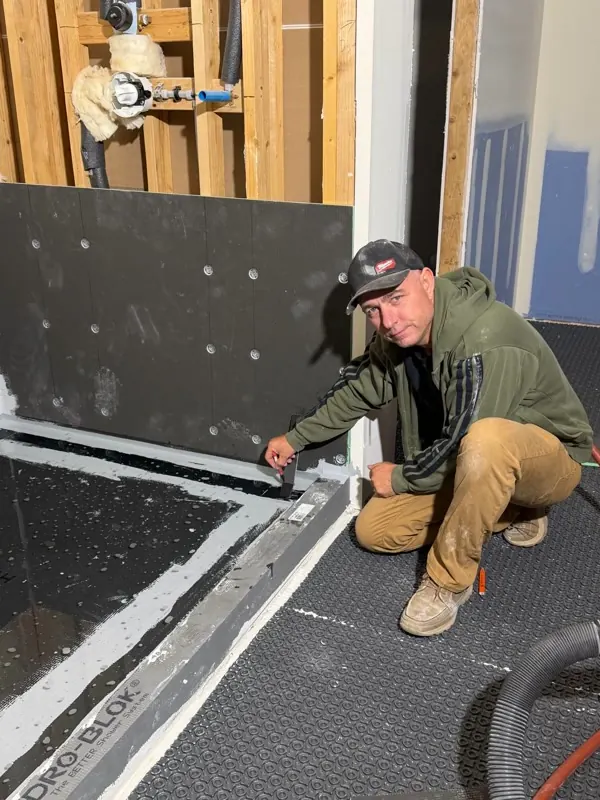
Waterproofing before shower tile is the layer that keeps water out of the walls and floor. Tile and grout are the finish. They are not the waterproof layer. That work happens first—then the tile goes on.
I install showers as bathroom tile work across Greater Seattle—Andzhei, one craftsman under Ability Tiles. This guide covers what belongs behind the tile, where showers fail early, and what to confirm on a site visit. Short answers also live on the FAQ.
Why tile and grout are not waterproof
Porcelain and ceramic look solid. Grout looks sealed. Neither stops water by itself. Grout absorbs. Joints move. Water that gets past the face needs a continuous membrane system behind the tile so it cannot soak the substrate.
That is why a low bid that skips wet-area prep is not a savings. You are paying for a surface without the layer that protects the room. Method guidance from the Tile Council of North America keeps those choices practical.
What has to be waterproofed before shower tile
Sequence matters. Substrate first—flat, sound, ready for wet-area work. Then the pan or floor plane with correct pitch to the drain. Walls get the membrane next. Seams, corners, and pipe penetrations get sealed so the system stays continuous. Curb and drain transitions finish the shell. Tile comes after that path is locked.
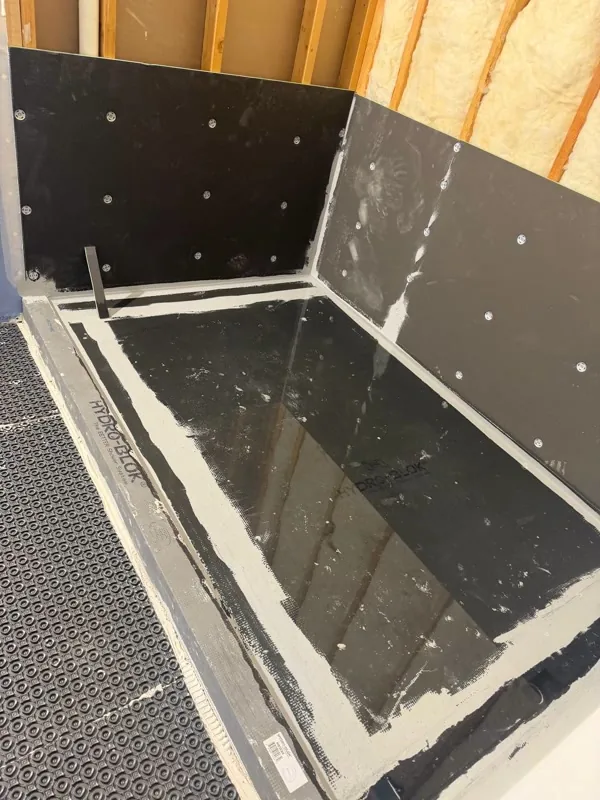
Systems vary—sheet membranes, liquid-applied layers, or integrated pan assemblies. The product name matters less than a continuous path from floor to walls, with details treated as carefully as the open fields. I name the approach on the visit so the quote matches the room, not a generic “waterproofing line.”
Details that fail first in wet showers
Open wall fields rarely fail first. Corners do. Niches and benches do. Curbs and wall-to-floor joints do. Drain connections do. Those spots take more time because water finds the weak seam.
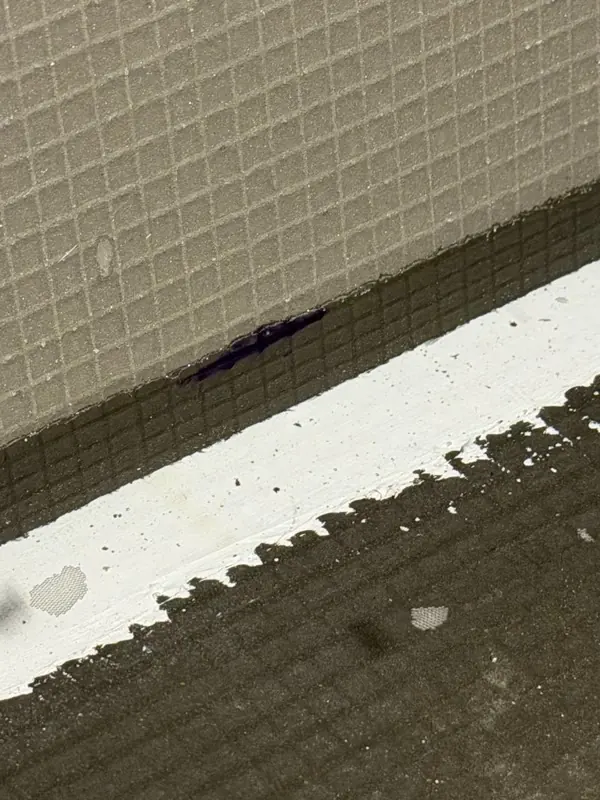
A careful shower build treats those details as part of the job—not extras. When walls open and soft substrate or old leak damage shows up, work pauses until the path is clear. Surprises get handled on site, not buried under new tile. If a limited fix is the right call later, see tile repair services.
How prep changes cost and timeline
Membrane work and cure time sit on the schedule before thinset and grout. Rushing those steps is how wet areas fail. A wall-only refresh is not the same job as rebuilding the pan and floor plane. Both can be right—they are not the same price or calendar.
For price drivers, see shower tile cost Seattle. For schedule context, read the bathroom tile timeline. Full shower scope lives on the bathroom and shower tile page.
What to confirm on a shower site visit
Ask how the membrane path is handled—floor, walls, seams, curb, and drain. Ask whether the pan stays or gets rebuilt. Ask how niches, benches, and glass coordination fit the scope. Ask when the shower can be used after grout. A clear visit answers those before work starts.
Share photos, room size, and whether you want walls only or a full shower package. Then request a visit or call (425) 737-8064. Quotes stay clearer when the wet-area path is named first.
Next step
Ready to talk through your room?
Share the project and timeline. I’ll follow up and schedule a site visit across Greater Seattle.