
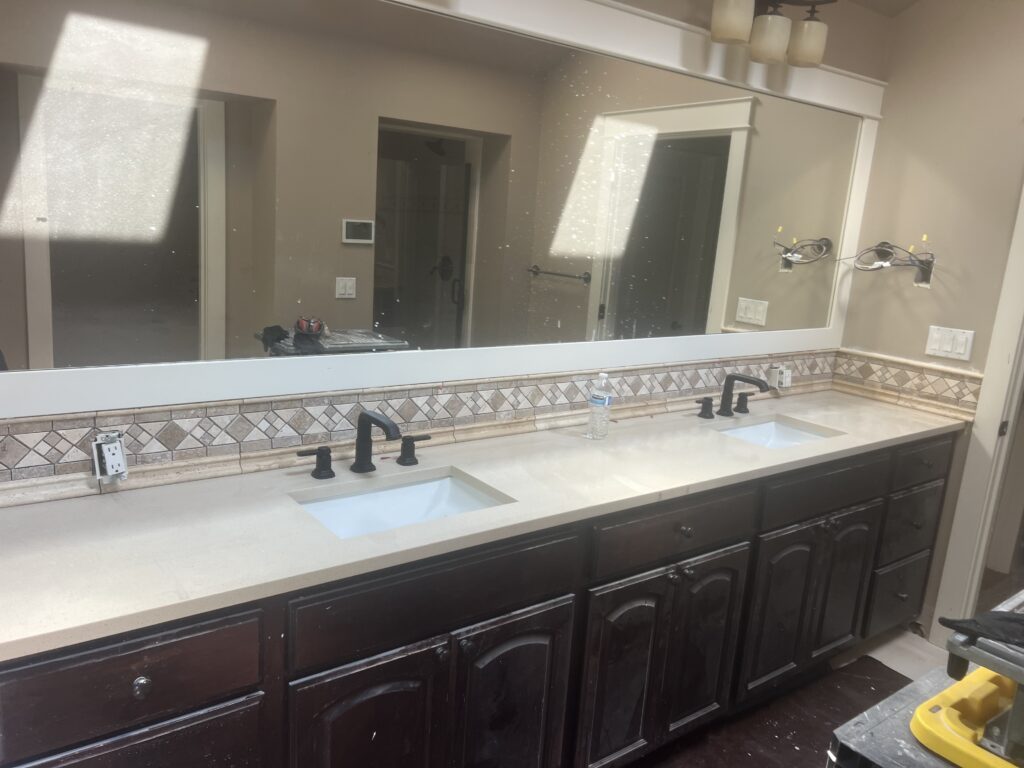
Bathroom remodel cost breaks into phases: demo, rough trade work, board and waterproofing, tile material and setting labor, vanity and fixtures, glass and paint, permits, and contingency. A single total hides where money goes. A phase view shows what can change, what cannot, and where a cut would hurt the room.
A common picture looks like this. Two quotes land on the kitchen table. One is a single line. One lists phases. The single line looks calm until a question comes up: does that number include waterproofing, glass, disposal, or repair after demo? A phase quote answers before work starts.
I am Andzhei, a tile installer in Greater Seattle. I write estimates around tile-led bathroom work and name the parts outside tile scope in plain terms. Licensed plumbers and electricians price and do that trade work. No phase list can give an honest price for a room sight unseen, and this guide gives no made-up range. It explains why each phase carries cost.
The estimate that looked too simple
A low single total can mean a tight scope, a missing phase, or a room in better shape than most. It can also mean the quote left hard parts vague. Words like “prep,” “trim,” or “finish” can hide very different amounts of work.
Ask what each word covers. Prep can mean skim and set tile in one quote. Prep can mean remove loose board, flatten walls, rebuild a shower base, and waterproof in another quote. Both use the same word. Only one matches a wet shower.
That is why how I price a bathroom remodel starts with a site visit and a named scope, not a fast number from photos alone.
Why a phase view beats a single total
A phase view lets a homeowner keep, cut, or move scope with eyes open. Keep layout and change tile only? That choice protects plumbing cost. Move a shower drain? That choice reaches into rough work, inspection, floor build, and tile layout.
Phases also show risk. Demo may reveal damage. Tile pattern may add labor. Glass may wait on tile and then add fabrication time. None of that is padding. Each phase has labor, material, disposal, cure time, or a trade ticket behind it.
Use phases to compare quotes line by line.
Demo and disposal
Careful demo costs more than rough tear-out and saves later. Studs, pipes, and wires need to survive. Dust control and floor protection protect the rest of the house.
Hidden damage found here is not an upsell by itself. Soft subfloor, old leak stains, and loose board have to be dealt with before new tile. The phase grows when the room asks for repair.
Rough plumbing and electrical
Rough cost depends on distance and change. A fixture that stays in place costs less trade time than a fixture that moves across the room. A new shower valve, moved drain, added outlet, or new fan run each adds parts, labor, and inspection scope.
Licensed trades carry license, insurance, code duty, and warranty for that work. That is part of the price, and it should be. I do not do that trade work and do not bury a guess for it inside tile labor.
Layout choices made here echo into tile. Drain type sets floor cuts. Valve depth sets trim fit. Fan placement sets ceiling or wall finish. Cheap rough decisions can make a fine tile job fight the room.
Board, substrate, and waterproofing
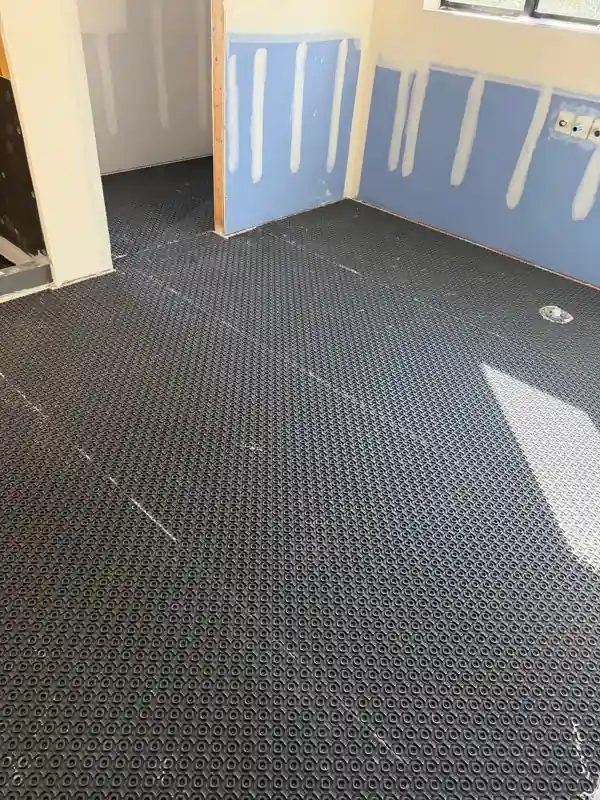
This phase pays for the base tile needs: backer board, screws, seam treatment, floor prep, shower base work, and a continuous waterproof membrane tied to the drain. Corners, niches, benches, and curbs take hand time. Cure time sits on the schedule even when no one is in the room.
Flat work costs money because tile shows every wave. A wall that leans or bows needs correction before large tile can sit clean. A floor that flexes needs attention before grout can hold.
Cutting this phase is the most costly save in a shower. Tile and grout are not the waterproof layer. Water behind tile repairs itself never; a person pays to open the room again.
Tile materials and setting labor
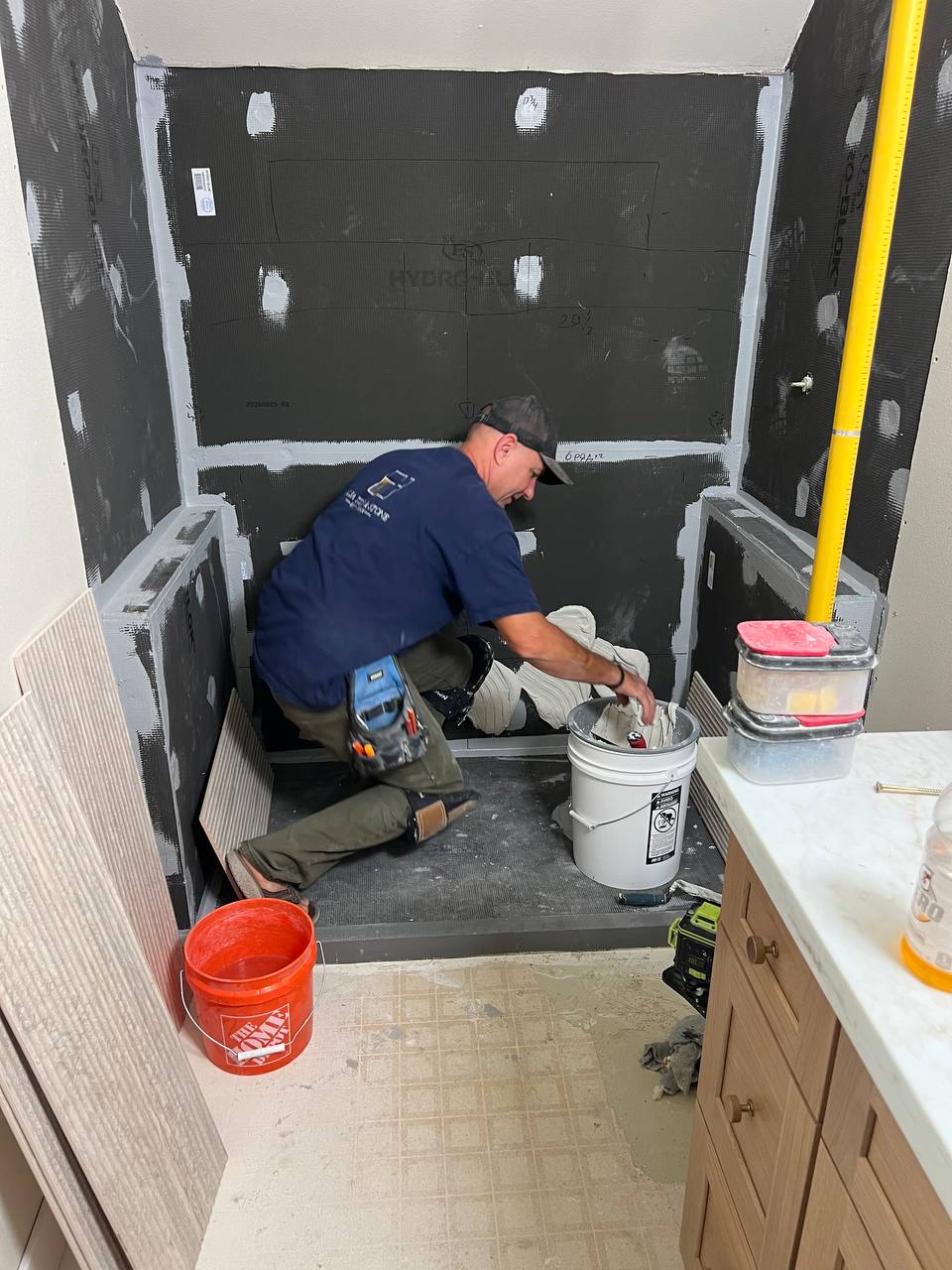
Tile cost has two parts: material and the labor to set it well. Material includes tile, mortar, grout, sealant, trim, and spare boxes. Setting labor includes layout, cuts, handling, spacing, leveling, and cleaning as work moves.
Pattern changes labor more than many expect. A straight stack sets faster than a herringbone. Large tile can cover area fast but needs flat walls, strong support, and careful cuts. Mosaics need a true plane and patient alignment. Bathroom tile work explains that tile depth in more detail.
Tile price per box is only one line. A costly tile set poorly still looks poor. A plain tile set clean, flat, and well-planned can look sharp for years.
Vanity, countertop, and fixtures
Vanity cost swings with size, build type, countertop material, and storage needs. Fixtures swing with finish, valve type, and trim design. A freestanding piece, a floating vanity, and a stock cabinet each ask for a different install path.
Water use also belongs in fixture choice. EPA WaterSense Showerheads explains labeled heads that save water without a vague claim on feel. Faucets and toilets carry similar label choices. Price talk should include use cost, not box price alone.
Order these pieces early. Rough valve and trim must match. Vanity size sets final plumbing points and backsplash or side splash needs. Late swaps can reopen tile and paint decisions.
Glass, paint, and trim
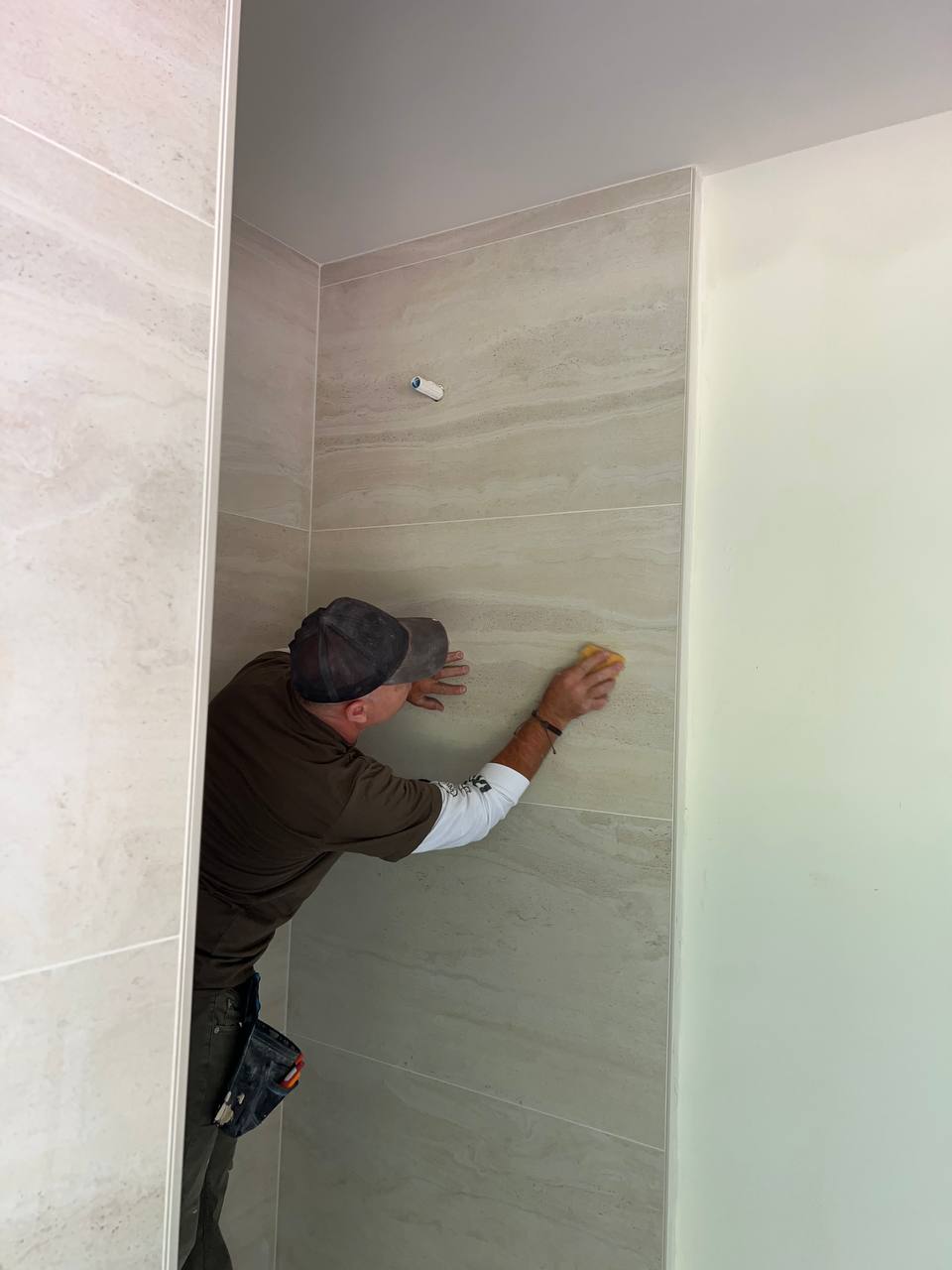
Glass is custom work measured after tile. Size, hardware, door swing, and panel count drive price. A fixed panel and a swinging door are not the same job. Fabrication wait is part of the calendar, not a delay trick.
Paint and trim look light and still take prep, masking, coats, and dry time. Walls near tile need clean caulk lines and careful cutting in. Trim that meets tile needs scribing or a planned reveal, not a thick bead to hide a gap.
This phase sits late for a reason. Paint before tile gets damaged. Glass before tile gets measured wrong. Order saves rework.
Permits and inspections
Permit cost is fees plus the time to prepare, meet inspections, and keep work open until checks pass. City rules in Greater Seattle vary. A layout move, plumbing change, or electrical change can change the permit path.
Inspections protect resale and insurance records, and catch hidden work while walls are open. A phase list should name who pulls permits for trade scope and when inspection holds sit on the schedule.
Skip talk that treats permits as optional when scope needs them. That risk lands on the homeowner, not on a quote sheet.
Contingency
Contingency is money held for what demo reveals: rot, old patch work, out-of-level framing, or a base that cannot stay. A room that opens clean may not use it. A room with old leak damage may need every part of it.
The big drivers that move a budget
Five drivers move a bathroom budget most: moving plumbing, changing layout, shower size and type, tile size and pattern, and condition after demo. Each driver reaches into more than one phase. A moved drain touches rough work, floor build, waterproofing, tile cuts, and inspection timing.
Finish level matters too. Custom glass, stone counters, and specialty fixtures raise material and handling care. Keeping fixtures in place and choosing a clean, settable tile pattern protects budget without making the room look cheap.
For scope that changes the room plan, compare bathroom renovation with a tile-only refresh. The right size job is the one the room needs.
How to read an itemized estimate
Read for verbs. “Install tile” should name prep, membrane, layout, grout, and sealant at plane changes, or state what is excluded. “Plumbing” should name the licensed trade path. “Glass” should state measured after tile. Vague nouns hide cost; clear verbs show it.
The FTC guide How To Avoid a Home Improvement Scam gives a plain contract checklist: written scope, materials, price, dates, and care with up-front payment. Before signing in Washington, use L&I to Verify a Contractor, Tradesperson or Business for registration, bond, and insurance status.
Still comparing numbers? Short answers live on questions I hear before a remodel.