
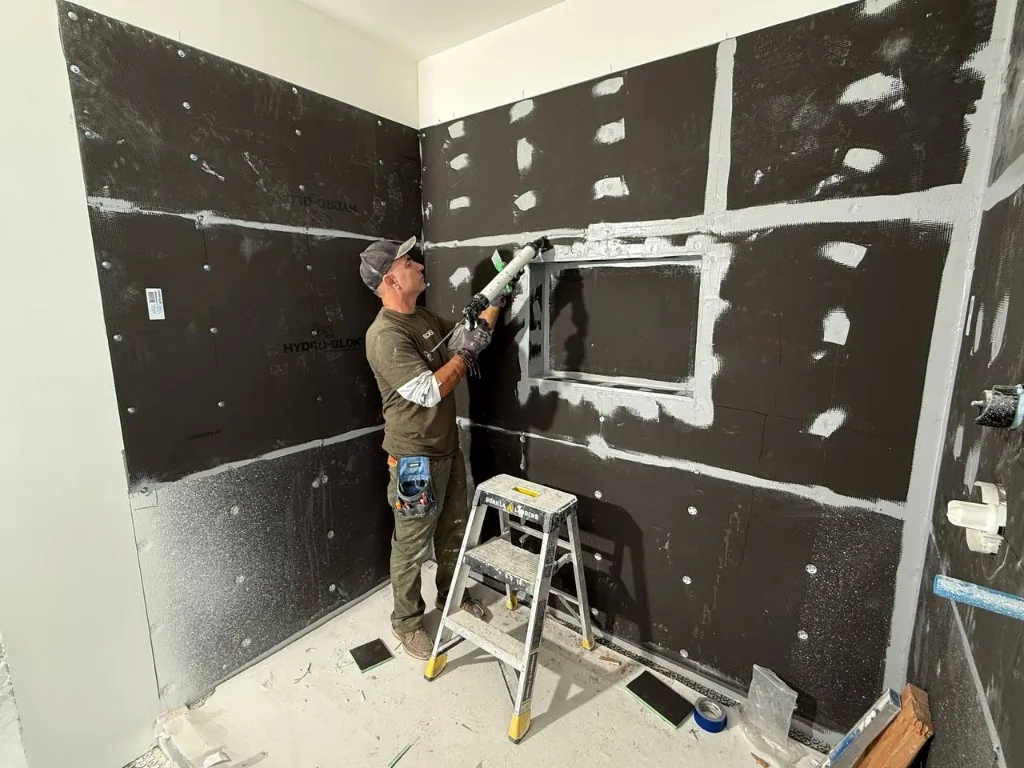
A bathroom remodel works in dependency order: layout first, framing and blocking, rough-in by licensed trades, inspection, flat substrate, waterproofing and flood test, tile, grout and sealant, then glass and punch list. Each layer covers the last one. A wrong order cannot be fixed with a nicer tile.
A common picture looks like this. A shower valve sits too deep because tile thickness never entered the rough-in talk. A niche lands half on a grout line because tile size came late. Glass gets ordered from rough walls and then does not fit finished tile. None of those faults start at tile setting. Each starts with a decision made out of order.
I am Andzhei. I install tile across Greater Seattle. My work sits late in a remodel and depends on early choices. Plumbing and electrical rough-in belong to licensed trades for that work. Tile planning still needs a voice before walls close, because drain, valve, niche, and bench spots become tile facts for years.
The shower that was planned backwards
Picture a shower near the end of tile work. The drain sits off the layout center. One wall carries a thin cut on the left and a wide cut on the right. The niche shelf holds water because slope never made the plan. The tile can be clean and still look wrong.
That room was not failed by one bad cut. That room was planned backwards. Fixtures came first, tile came last, and tile got asked to hide geometry that no grout line can hide.
CDC puts the moisture point plainly on Mold: mold growth needs a moisture problem fixed, not just a surface cleaned. Sequence is how a shower avoids building that moisture problem in.
The rule underneath everything
Each layer buries the one before it. Framing hides in board. Board hides in membrane. Membrane hides in tile. Tile hides little. Grout lines show layout, walls show flatness, and corners show care.
That rule makes order a quality issue, not a schedule taste. A flatness miss under large tile becomes lippage. A membrane miss in a corner becomes a leak path. A blocking miss becomes a loose grab bar or a cabinet screw in empty board.
Work forward with the end in view. Ask at each layer: what will the next layer need from this one?
Layout before tile, tile before rough-in positions
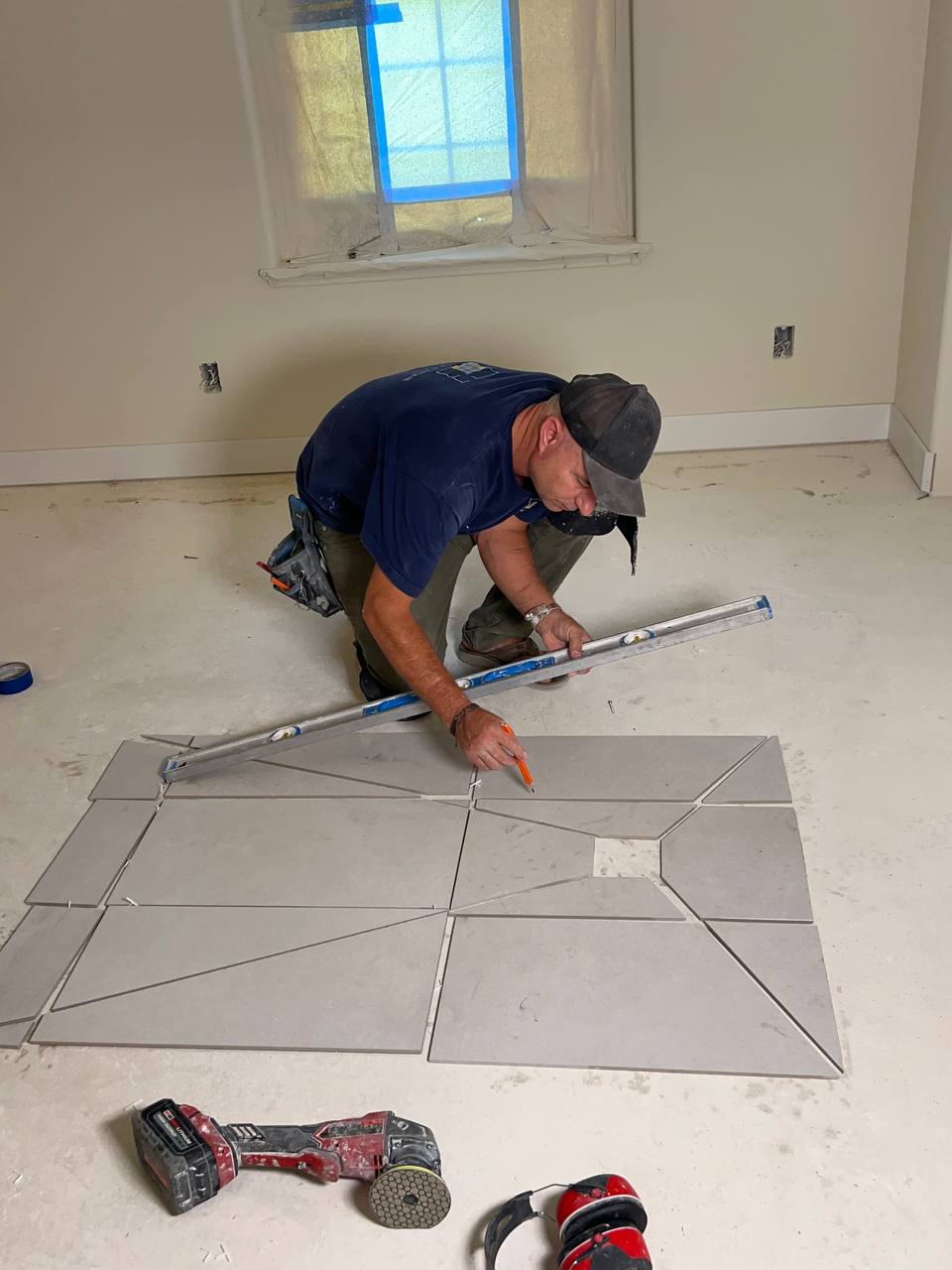
Start with the room, then the tile, then rough positions. Room use sets fixture spots. Tile size and pattern set grout lines. Grout lines help set drain, valve, niche, and bench positions that look planned and work well.
A centered drain looks right only if floor layout centers on it. A valve looks right when trim sits flat on finished tile at a safe depth. A niche looks right when shelf height, tile cuts, and stud spacing agree. A bench works when height, slope, and waterproofing agree.
That early tile voice is the point of bathroom tile planned around the room. Tile serves layout here. Layout does not serve a tile bought on sale.
Framing and blocking for the tile plan
Framing gives tile a true, supported shape. Studs need correction when walls wave. Shower curbs need straight, solid build. Niches need framed openings with slope in mind. Benches need support that will not flex under tile.
Blocking goes where future load lands: grab bars, glass hinges, vanity, mirrors, and accessories. A screw into tile and board alone is not a plan. Solid wood behind board is the plan, placed before board closes the wall.
The Tile Council of North America answers backing questions for shower methods B421 and B422 on Showers. That TCNA page is an industry standards source, not a government page. The point stands: backing and membrane must agree as one system, chosen before tile.
Rough-in, then stop
Rough-in sets drain, supplies, valve, fan, and boxes to the locked plan. Licensed trades do that work under the permit path for the scope. Tile thickness, drain type, and valve depth need to be known at this stage, even though tile is still boxes on a pallet.
Then stop. Seattle lists inspection types and timing on Inspections. Other Greater Seattle cities run local rules, so confirm the city path. Walls stay open until required checks pass.
Flat walls before large tile
Large tile is honest. A bowed wall shows as a shadow gap, a proud edge, or a grout line that wanders. Flattening belongs before membrane and tile, with straightedges on the wall and corrections made in the substrate stage.
Floor flatness matters in a different way. A floor can be level in spots and still pond near a drain. Shower floors need slope to drain at a steady rate, with tile size in mind. Small tile follows slope breaks with ease. Large tile needs a floor plan built for that format.
Do not ask thinset to fix framing. Mortar bonds tile. Mortar is not a wall-straightening plan at thick, uneven depth.
Waterproofing as a tested system
Waterproofing goes on as a continuous system: seams, corners, curb, niche, bench, and drain tie-in all connected. One missed seam breaks the chain. Membrane needs full cure before tile, at the time the system maker states.
A shower pan flood test belongs before tile where the system and local rules call for it. Plug, fill, wait, and inspect. Water found now costs a repair to membrane. Water found after tile costs tile, board, and time.
Tile and grout finish the room. Neither one is the waterproof layer. That order cannot swap.
Tile in working order
Tile order protects finished work. Shower tile often leads, floor tile follows with protection in place, and wall or backsplash tile ties in where design calls for it. Layout starts from the view that matters: door line, vanity view, and shower entry.
Cuts should balance. Corners should meet clean. Niche edges, bench tops, and curb faces need full support and tight alignment. That care is at the center of my bathroom remodel work in Greater Seattle and of custom tile installation when layout gets complex.
Set tile, let it cure, then grout. Rushing cure time to keep a day on schedule can cost weeks later.
Grout where it belongs, sealant where planes change
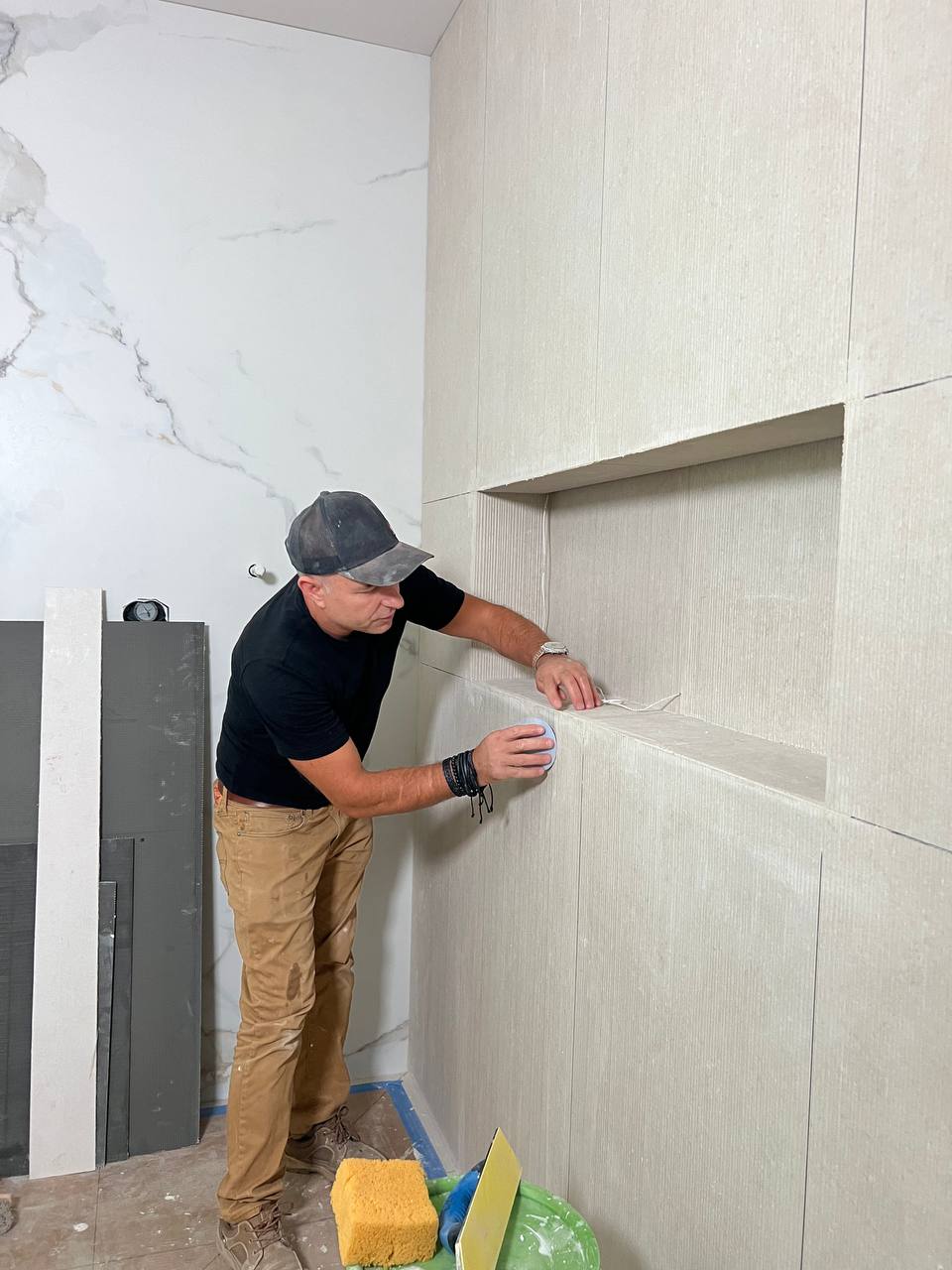
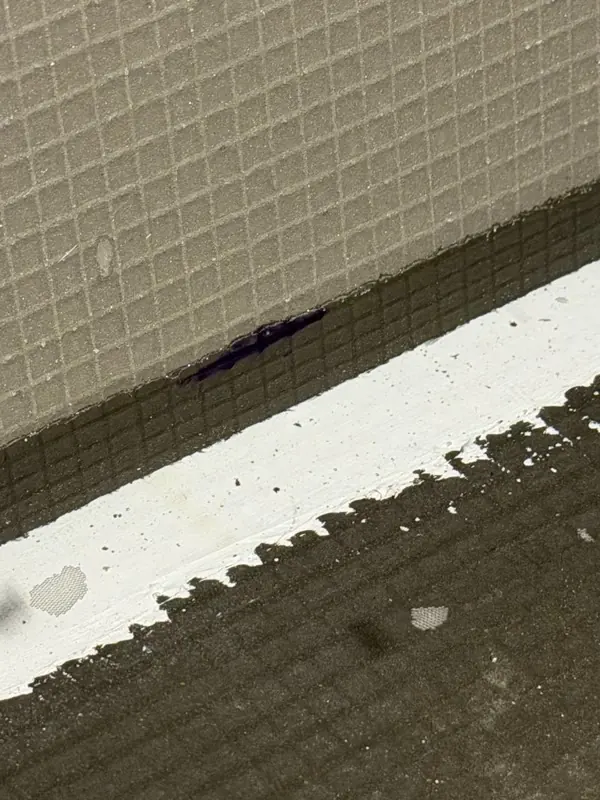
Grout fills joints between tile on the same plane. Sealant belongs where planes change: wall to wall, wall to floor, tile to tub, tile to vanity, and around fixtures. Planes move at different rates. A hard grout joint in a corner can crack and open a water path.
Sealant needs a clean, dry joint and the right backing depth. A thick smear over a wide gap is not a joint. Tool it neat, keep lines straight, and plan on care over time. Sealant is a maintained joint, not a lifetime weld.
Color choice matters last. Match grout to the design. Keep sealant color close at corners so the joint reads as one line.
What has to wait for tile
Glass waits. Measure glass from finished tile faces, after grout. Curb width, wall plumb, and bench edges all land in that measure. A panel ordered from board or framing numbers can miss by enough to need a remake.
Some trim waits too. Valve trim depth proves out on tile. Towel bars and accessories wait for blocking checks and finished surfaces. Paint touch-up waits until tile dust and grout haze are done.
Waiting here is not lost time. Waiting here is the job done once.
Punch list and handover
Check the room in strong light. Sight down grout lines. Run a hand over tile edges for lippage. Run shower water and watch slope to drain. Check niches and bench tops for standing water. Open glass or door swing if glass is in.
Write spare tile, grout, and sealant details down. Keep drain, valve, and fixture records with house papers. A clean handover gives the next repair a head start, years from now.
Not sure where a room should start? See what I do for tile-led bathroom scope in Greater Seattle.